University Student Life in Germany
Access world-class, tuition-free public higher education built directly into Europe's largest industrial and economic powerhouse.
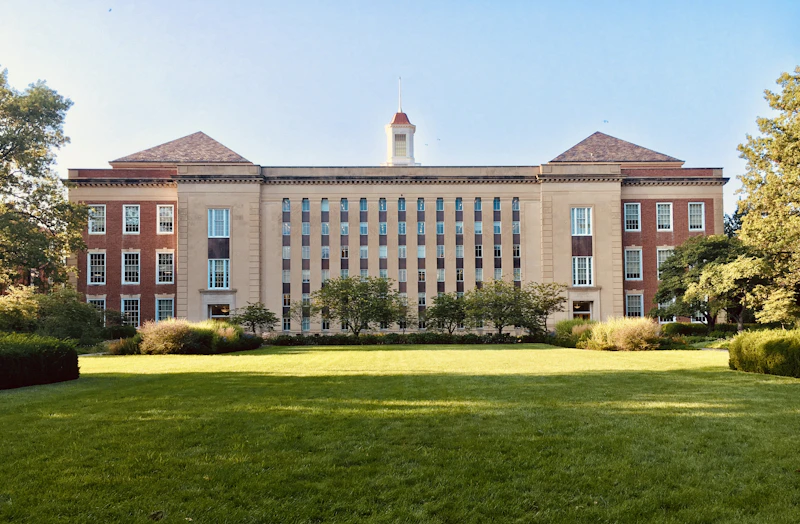
Tuition-Free Public Powerhouses
With global recognition in engineering, computer science, and business, Germany's public institutions eliminate tuition barriers to focus purely on academic merit.
The 'Werkstudent' Advantage
Substantial part-time student work rights allow you to integrate directly into active engineering, design, or marketing departments as a paid professional asset.
Direct Industrial Ecosystems
Whether choosing theoretical research tracks or highly applied sciences, universities maintain intense development loops with local global enterprises.
Accredited English Frameworks
International Master's programs offer completely English-medium curriculums while acting as structured environments to acquire critical local language skills.
🇩🇪 The Industrial Leverage
Germany balances premium academic quality with high professional value. By exchanging upfront tuition costs for solid, personal living-fund guarantees, you earn a top-tier European degree backed by a non-negotiable 18-month timeline to secure your permanent global career footing.
🏛️ The Academic Framework: Private & Career-Centric Applied Sciences
The German higher education system traditional tracks are divided between research-heavy public Universitäten and practical Fachhochschulen. However, for international students prioritizing direct corporate pathways, flexible scheduling, and rapid entry into the European job market, private Universities of Applied Sciences offer a distinctly streamlined, industry-first alternative:
-
SRH University (SRH Berlin, Heidelberg, etc.): One of Germany’s premier, state-recognized private education providers. SRH operates on a unique “CORE Principle” (Competence-Oriented Research and Education), which replaces dense exam blocks with 5-week practical blocks and continuous skill verification. It features dedicated global tech, design, and digital business campuses.
-
IU International University of Applied Sciences: Germany’s largest state-accredited university, globally recognized for its highly flexible hybrid structure. IU allows students to blend online self-paced modules with interactive on-campus lectures in major economic hubs like Berlin and Bad Honnef, giving students the ultimate freedom to balance academic timelines with professional corporate engagement.
đź’° The Financial Reality: Private Fees & The Visa Gatekeeper
Unlike Germany’s tuition-free public system, enrolling in premier private institutions requires navigating an independent fee structure alongside non-negotiable federal residency criteria.
+-------------------------------------------------------------------+
| GERMAN PRIVATE UAS COST MATRIX |
+-------------------------------------------------------------------+
| [SRH Tech/Business Non-EU] -> €9,250 - €11,800 / Year |
| [SRH One-Time Enrollment] -> €1,000 (Non-EU Base) |
| [IU Program On-Campus Base] -> €3,500 - €6,500 / Year |
| [IU Full-Time Campus Rate] -> From €394 - €449 / Month |
+-------------------------------------------------------------------+
| [Visa Requirement] -> €11,904 Locked in a Blocked Account|
+-------------------------------------------------------------------+
-
Private Tuition Structures: Fees depend entirely on the chosen instructional format and program intensity. At SRH University, standard English-taught Bachelor’s and Master’s tracks (such as Applied Computer Science or International Management) range between €9,250 and €11,800 per year for non-EU students, with a mandatory one-time institutional enrollment fee of €1,000. At IU International University, tuition scales dynamically based on whether you opt for purely online modules or full-time on-campus tracking; on-campus paths start roughly from €394 per month for Bachelor’s and €449 per month for Master’s programs (equivalent to ~€4,700 to €5,400+ annually).
-
The Blocked Account (Sperrkonto): To secure a German student visa, you must legally prove you can support yourself. You are required to deposit exactly €11,904 into a specialized German blocked bank account (via official providers like Expatrio, Fintiba, or Coracle). Once you arrive in Germany, the bank releases exactly €992 per month to cover your rent, health insurance, and food.
🇩🇪 Daily Student Life & Corporate Integration
-
The Housing Crunch: Finding accommodation is the single biggest challenge for international students in Germany. University dormitories (Studentenwerk) are incredibly affordable (€250 to €400/month) but have massive waiting lists. Most students live in a WG (Wohngemeinschaft)—a shared flat where you rent a private room and split bills, costing €350 to €700/month depending on the city (Munich, Frankfurt, and Berlin being highly competitive).
-
Extensive Part-Time Working Rights: International students can work 140 full days or 280 half days per year. A massive benefit here is working as a Werkstudent (Working Student). Tech, automation, and digital marketing students can secure part-time professional roles at mid-to-enterprise-level companies, earning €14 to €22 per hour while building a local corporate network.
-
The Language Nuance: While many Master’s degrees are taught entirely in English, everyday life and the hidden corporate market require German. Learning conversational German (at least B1/B2 level) dramatically multiplies your chances of landing high-tier internships and post-graduate jobs.
-
The 18-Month Job-Seeker Visa: Upon graduation, Germany grants an incredibly generous 18-month stay-back visa specifically to find a job related to your degree. Once you land a contract, it seamlessly transitions into a residency and work permit.